When the Mississippi Ran Backward
February 7, 1812 - A powerful earthquake struck the New Madrid region, one of a series of massive quakes that shook the central Mississippi Valley between December 1811 and early 1812.
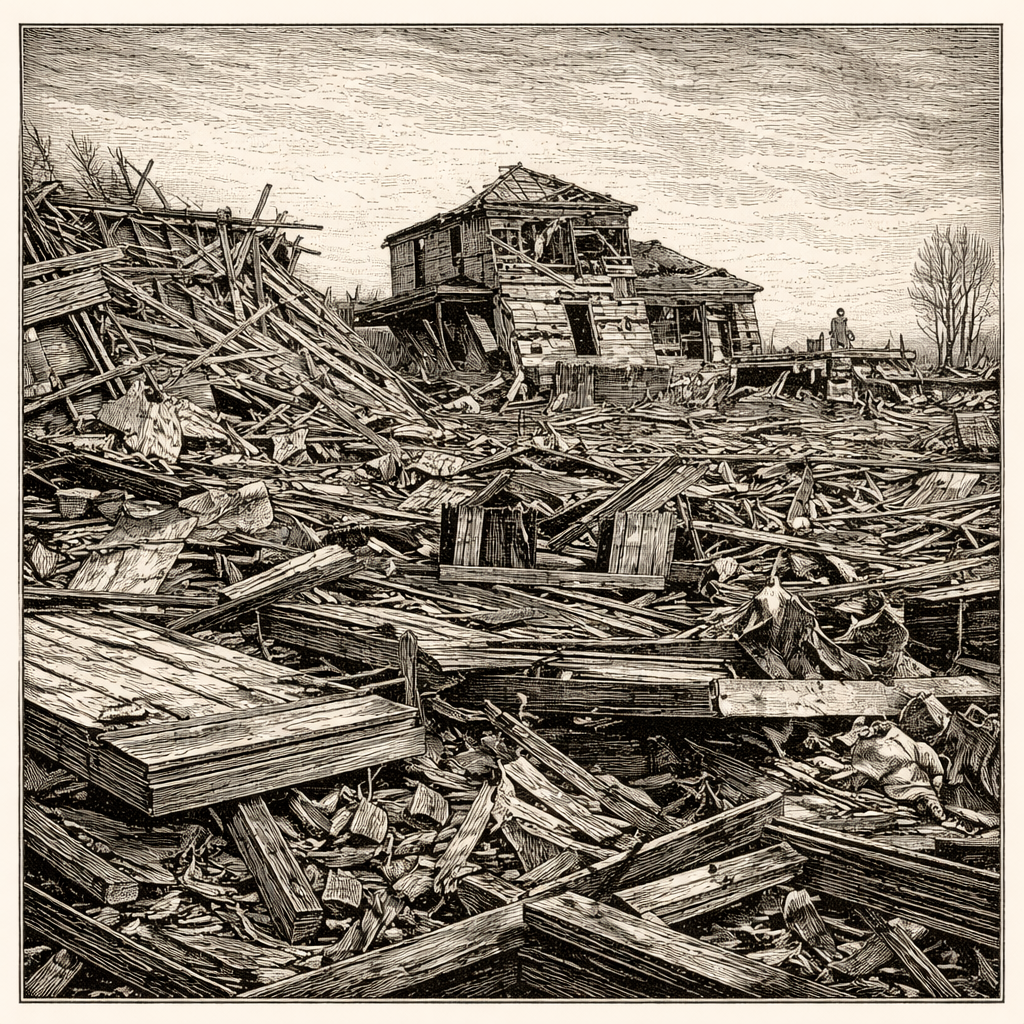
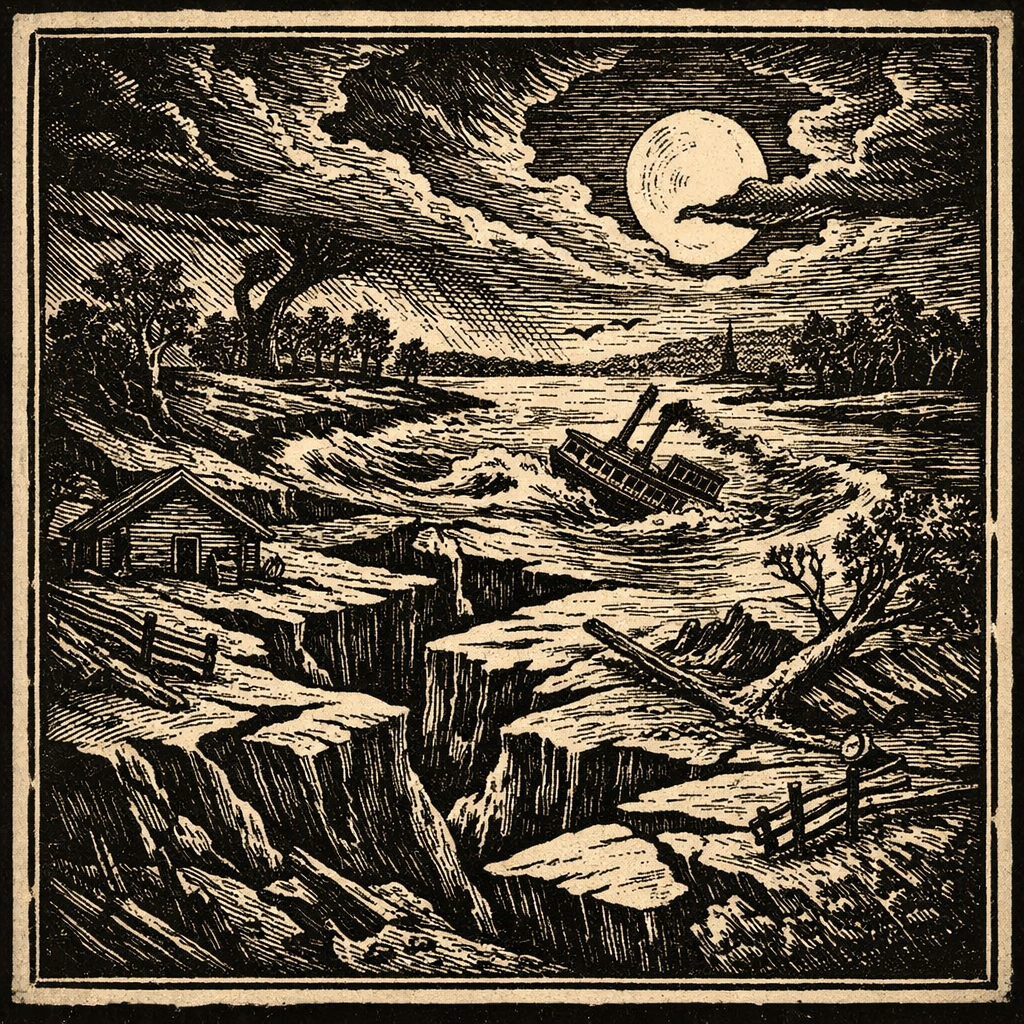
The February shock, likely in the magnitude 7.5–8.0 range, caused extreme ground failure: fissures opened, forests were flattened, and riverbanks collapsed. Seiches in the Mississippi River were so intense that the river appeared to briefly flow backward in places.
Widespread subsidence contributed to the formation of Reelfoot Lake, which still exists today. Damage was reported across a vast area, with strong shaking felt as far away as Charleston, South Carolina.
A precise death toll is unknown. Fatalities likely occurred among riverboat crews and nearby settlements, and Indigenous communities in the region were severely affected, though records of their losses are incomplete.