Kon Tiki
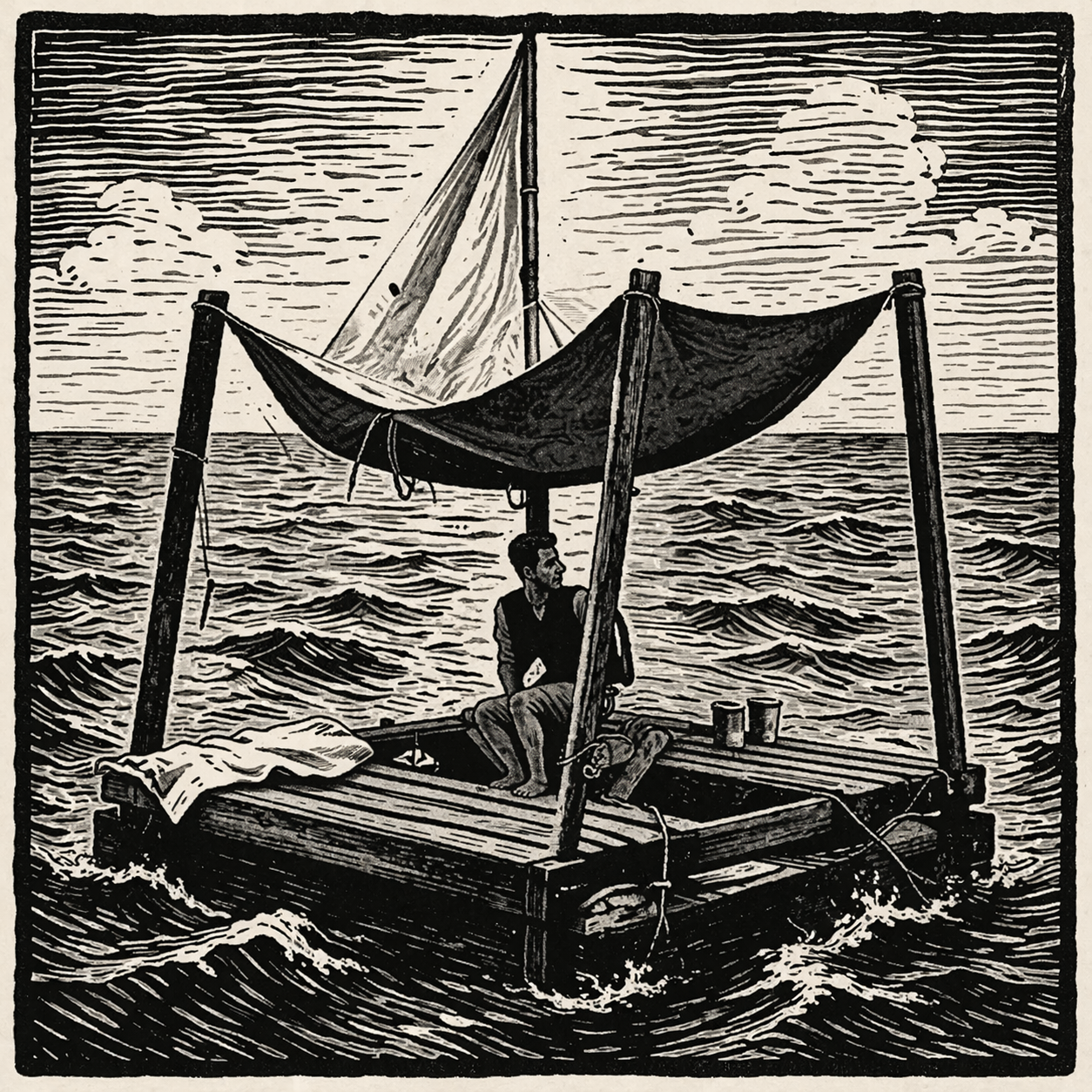
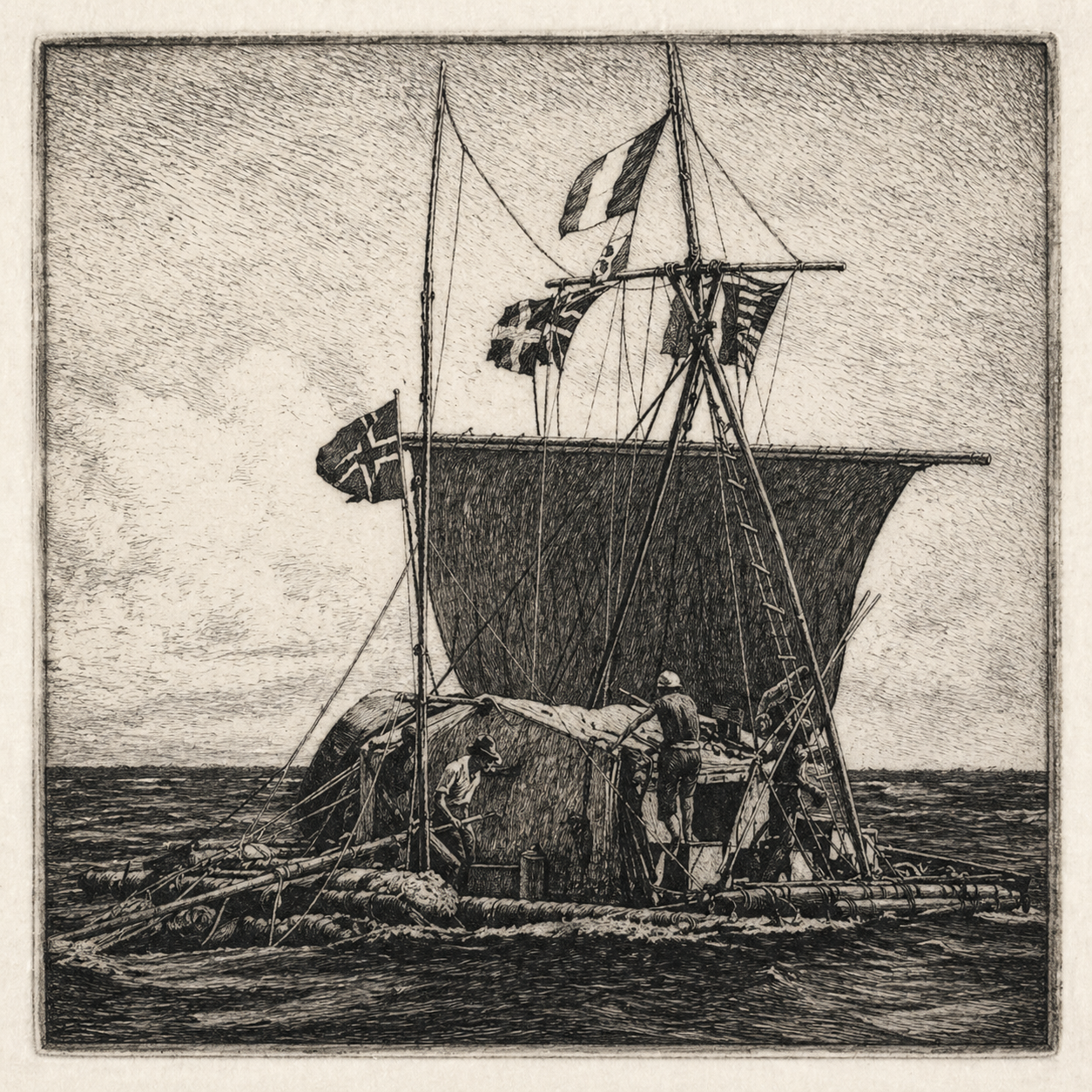
April 28, 1947 - Norwegian explorer Thor Heyerdahl shoved off from the coast of Peru on a hand-built balsa wood raft called the Kon-Tiki, aiming straight into the vast uncertainty of the Pacific.
The mission: prove that ancient South Americans could have drifted or sailed with currents and winds all the way to Polynesia. No modern tools, no engine, no metal fastenings - just rope, wood, and faith in ocean currents.
Over 101 days, Heyerdahl and his five-man crew floated more than 4,300 miles, finally smashing into a reef in the Tuamotu Islands. They made it.
But here’s the twist: While the voyage proved the journey was possible, it didn’t prove it actually happened.
Modern archaeology, linguistics, and DNA research overwhelmingly show that Polynesian peoples originated from Southeast Asia, not South America. Heyerdahl’s theory didn’t hold up, but his stunt reshaped experimental archaeology and captured the world’s imagination.
He documented everything in the book The Kon-Tiki Expedition, which became a global bestseller. Then came the film Kon-Tiki, a grainy, wave-soaked record of the journey that snagged the Academy Award for Best Documentary in 1951.
A raft of logs, a controversial idea, and a crossing that still feels slightly impossible - that’s Kon-Tiki.