Kafka
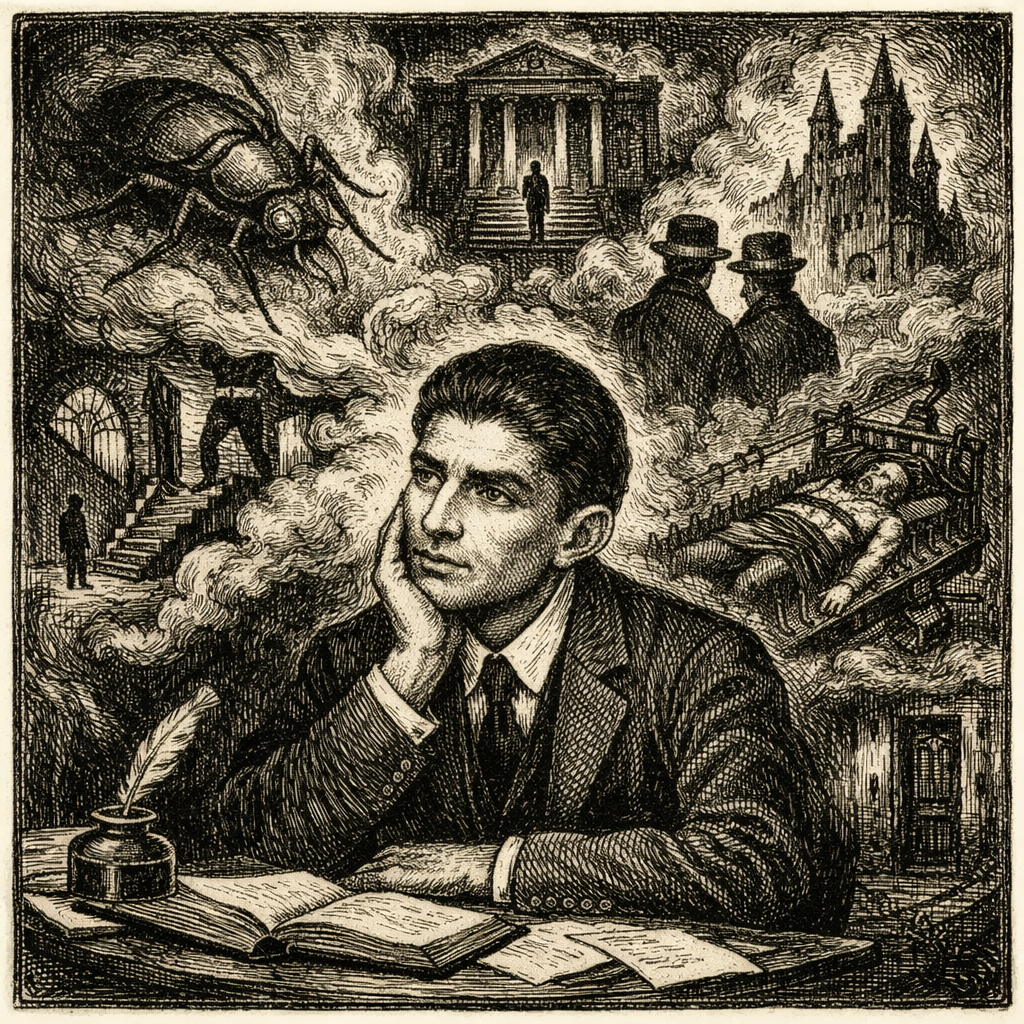
July 3, 1883 — Franz Kafka entered the world in Prague and spent most of his life working quietly as an insurance clerk.
By day, Kafka assessed workplace accidents and wrote reports about industrial injuries. By night, he wrote stories that feel like bad dreams dressed in legal paperwork. In one, a man wakes up as a giant insect (The Metamorphosis). In another, a man is arrested and prosecuted by a court that never explains his crime (The Trial).
Nothing explodes. No monsters roar. And yet everything is wrong.
Kafka’s life was almost as strange as his fiction.
He was engaged multiple times, but never married
He lived with a constant sense of guilt and inadequacy
He published very little while alive
Kafka developed tuberculosis, which eventually spread to his throat. By 1924, eating had become so painful that he could barely swallow. He slowly starved, unable to eat, his body shutting down in quiet increments. He was only 40 years old.
Before he died, Kafka instructed his friend, Max Brod, to burn all of his unpublished manuscripts after his death. Thankfully, Brod ignored him, and went on to edit and publish his unfinished novels. It was only then that the world awakened to the weird genius of Kafka.
His name became an adjective: Kafkaesque, a word for situations that feel irrational, bureaucratic, and quietly terrifying.